Fix the System
Why LinkedIn Outreach Breaks at Scale (and How to Fix It)

Date
Jan 11, 2026
Author
Pipeline Team
What Works at 50 Leads Fails at 500
LinkedIn outreach usually starts strong.
At low volume, teams can manually track who they contacted, who accepted, and who replied. Campaigns feel manageable. Results look promising. But as soon as volume increases, things start to break.
More leads don’t just create more opportunity - they create more complexity. And without the right systems in place, that complexity quickly turns into friction.
What Actually Breaks at Scale
When teams scale LinkedIn outreach, the problem isn’t messaging quality or effort. It’s operations.
Here’s what typically starts to fail:
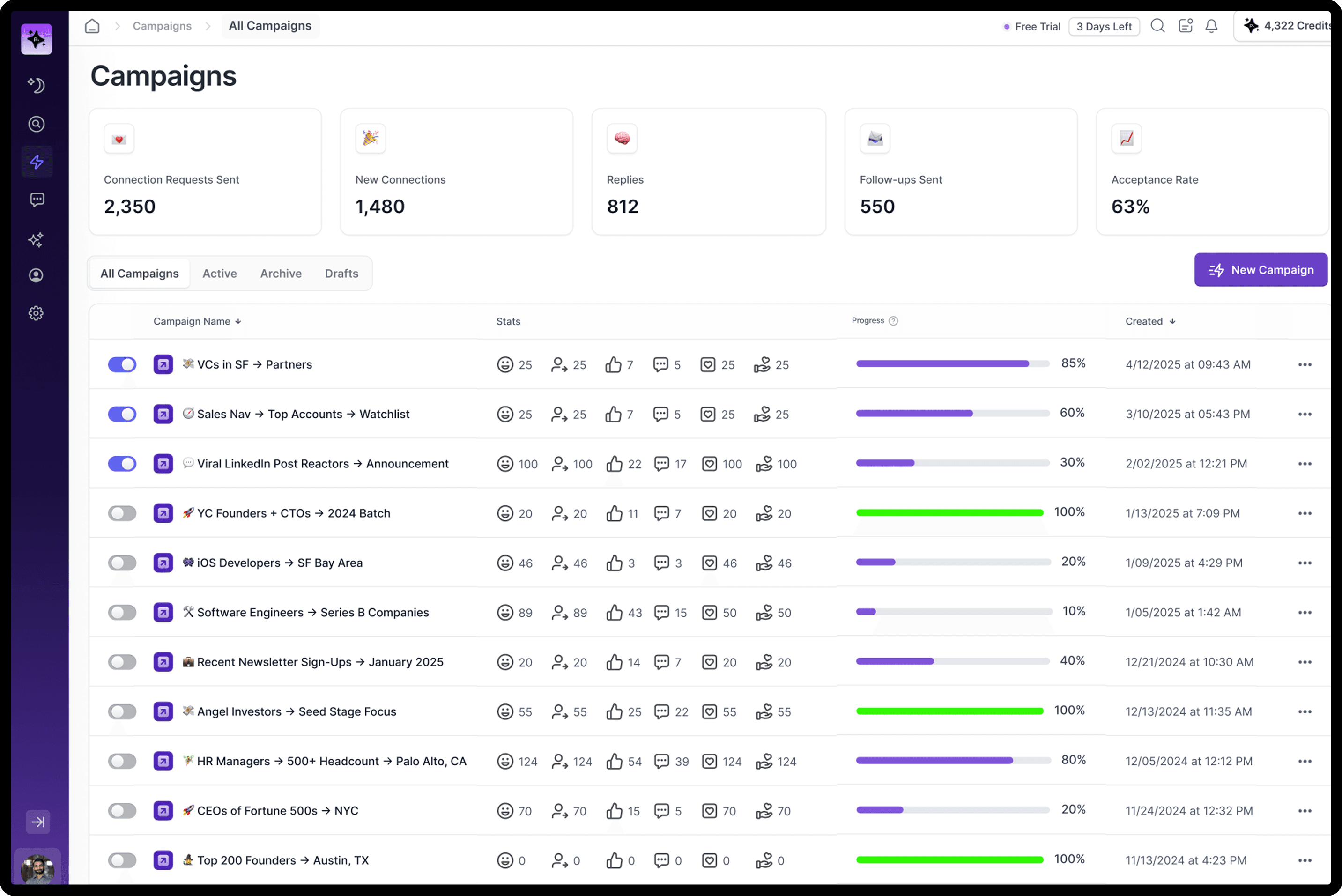
Visibility
Accepted connections and replies live only inside LinkedIn. There’s no shared view of what’s happening across campaigns.Follow-through
Replies come in at unpredictable times. Without routing or ownership, responses get missed or delayed.Consistency
Some leads get followed up immediately. Others don’t. The experience becomes uneven.Data hygiene
Outreach activity isn’t reflected in CRMs or recruiting systems, so reporting and attribution fall apart.
At small scale, these issues are annoying. At larger scale, they quietly kill performance.
What Scalable Outreach Actually Requires
Teams that successfully scale LinkedIn outreach treat it like an operational system, not a one-off campaign.
That means:
Engagement signals are captured automatically
Accepted connections trigger defined next steps
Replies are routed to the right owner immediately
Outreach data flows into existing workflows
Instead of relying on memory or manual checks, the system does the coordination.
How Pipeline Fixes the Operational Gaps
Pipeline is designed to sit between LinkedIn and the rest of your stack, where most outreach breakdowns actually happen.
Instead of leaving engagement trapped inside LinkedIn, Pipeline captures key signals - connection accepts, replies, follow-ups - and turns them into structured data your team can act on. Accepted connections automatically move into the next step of a campaign. Replies are surfaced immediately so they don’t get buried or delayed. Engagement data flows into the tools your team already uses, whether that’s a CRM, Slack, or an automation workflow.
This removes the need for manual tracking, constant LinkedIn checks, or ad-hoc spreadsheets. Teams don’t have to remember who to follow up with or when - the system handles it.
By creating a clear bridge between outreach activity and downstream workflows, Pipeline closes the operational gaps that appear when outreach scales. What was previously fragmented becomes consistent, visible, and manageable.
TL;DR
Pipeline helps teams scale LinkedIn outreach by automatically capturing engagement, routing it into follow-up workflows, and keeping outreach data connected to the rest of the stack. What used to be fragmented becomes organized and actionable.