Follow-Up Playbook
How to Turn Connections Into Consistent Replies

Date
Jan 11, 2026
Author
Pipeline Team
The Problem With “Set It and Forget It” Outreach
Most LinkedIn campaigns fail for one simple reason: the work stops after the connection request is accepted. Teams send thousands of invites, celebrate acceptance rates, and then struggle to turn those connections into actual conversations.
The gap isn’t volume - it’s follow-through. Without a clear system for what happens after someone accepts, replies become inconsistent and hard to scale.
Why Replies Don’t Happen Automatically
An accepted connection doesn’t mean interest. It means permission. What happens next determines whether that permission turns into a conversation.
Common mistakes include:
Sending generic follow-ups
Waiting too long to message
Treating every accepted lead the same
Losing track of who accepted and when
Without structure, even strong campaigns stall.
A Simple Framework That Works
Teams that consistently generate replies follow a predictable flow:
Track accepted connections in real time
Send a timely, relevant follow-up
Personalize based on role, company, or campaign intent (utilizing {insert_variable}.
Route replies into an existing workflow (send a follow-up email, etc.)
The key is making this process repeatable - not manual.
How Pipeline Helps
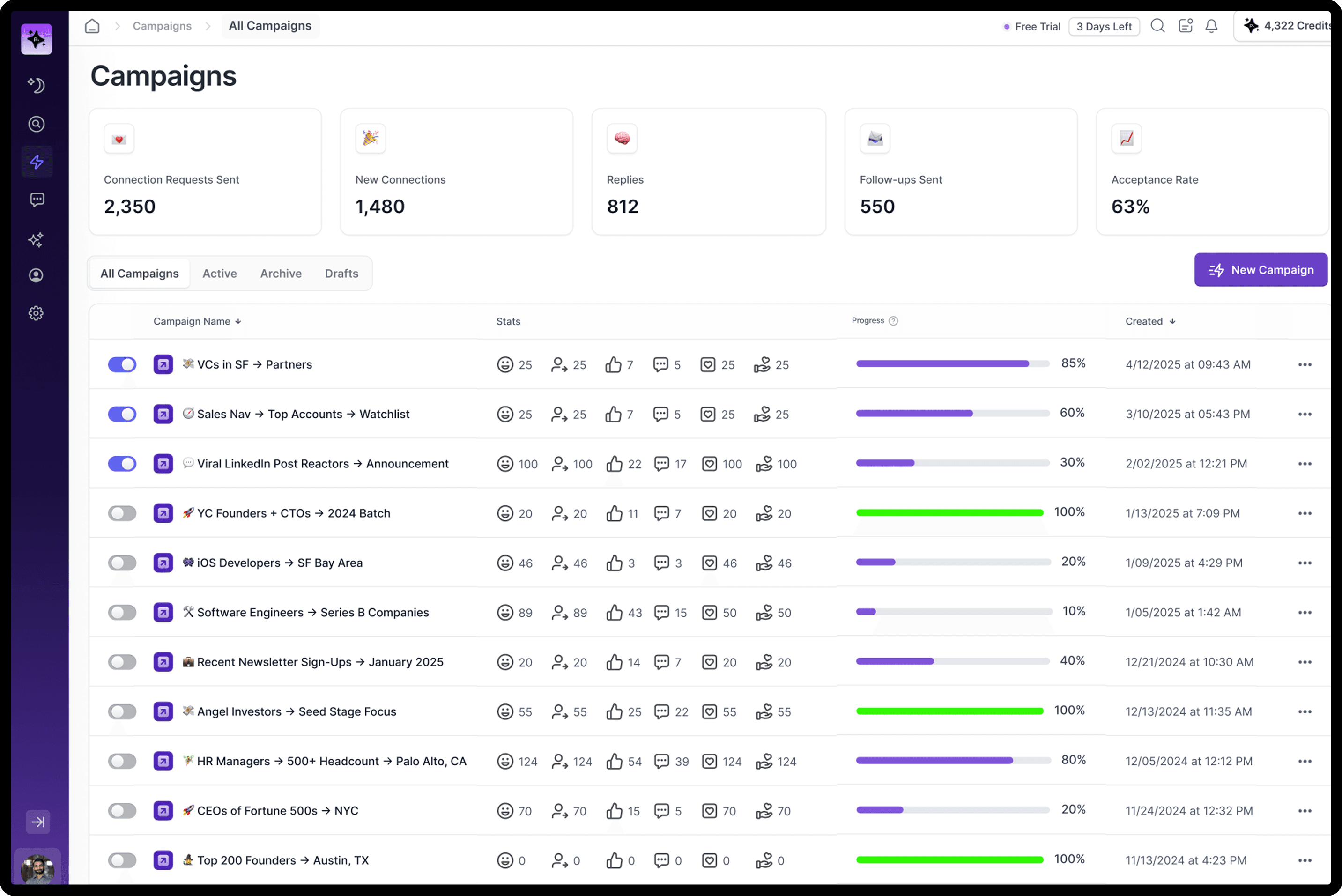
Pipeline automatically captures accepted connections and routes them into campaigns designed to continue the conversation. Instead of guessing who to follow up with, your team works from live engagement signals.
Accepted leads don’t just sit in LinkedIn - they move into structured workflows where replies are easier to generate and manage.
TL;DR
Replies aren’t about clever copy. They’re about timing, relevance, and consistency. When accepted connections flow into a system built for follow-up, conversations become predictable instead of random.